Aphids and the vineyard
Aphidoidea
Jan-20-2016
Organisms in the environment
All the beings that live in the spontaneous environment tend to colonize it, expanding their presence with increasingly numerous populations. However, the number of individuals belonging to the same species is conditioned by numerous factors. The environment is the place where every type of living thing has its own space, respecting the biological needs of all the others.
The essential functions of the life of every individual, both vegetable and animal, are nutrition and reproduction. These two elements are closely connected to each other by precise balances. Through the reproductive activity, the populations of each single species expand over vaster areas, but this is possible if there is an adequate availability of food. Reproduction and feeding thus both become conditioned by the abundance of nourishment that the place offers. The level of mortality of individual species still needs to be considered. This expression means the sensitivity that individuals have shown during their life cycle towards external factors, which influence the environment they occupy. The reproductive capacity of a species increases in proportion to its weakness, so that it cannot easily become extinct due to unexpected changes in climate or other even recurring causes. All of this represents a simple defense mechanism that has protected many beings in the past to this day. The abundance of children serves precisely to guarantee the survival of some of them in every way, therefore of the population itself.
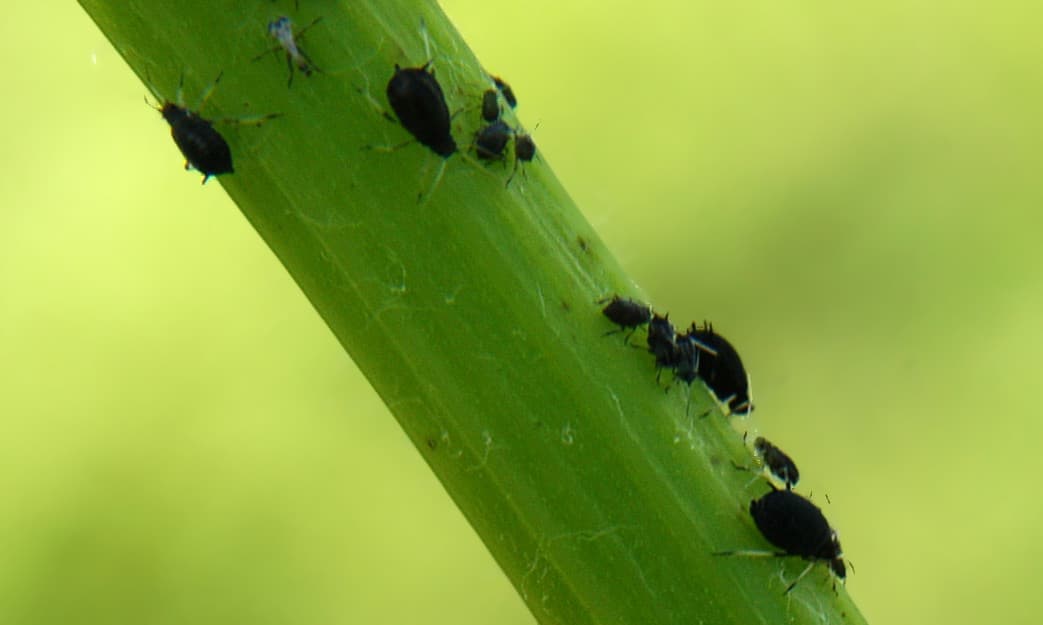
The vineyard and the black aphid
In cultivated environments such as the vineyard, there is obviously no limit to the availability of food for those beings who willingly feed on the vegetation of the vines. The only factor that can therefore counteract their spread is the climate. It sometimes happens that the climate, rather than being unfavourable, becomes an element of help for some of these parasites. If the parasitic populations were in that case already made up of a large number of individuals, the infestation would evolve. If, on the other hand, the individuals present were few or occasional, it could happen that some apparently new parasites were observed on the vines, the presence of which one is not prepared to accept. This is the case of aphids (lice) which in some years can spread on the tips of the shoots. The infestation occurs in the moment of maximum elongation of the vegetative axes (June), and affects the most vigorous plants and the parts of greatest growth, normally more exposed to the sun. Overgrown shoots tend to remain curved and show some suffering. Very dense colonies of parasites are rarely observed and, in most cases, the phenomenon ends spontaneously, without causing further concern. The presence of these parasites is detected only if the seasonal climatic trend is very favorable to them. At the same time it is in fact easy to observe colonies of aphids belonging to other species which, with exceptional persistence, invade fruit trees, vegetable gardens and weeds.